
FP Partner Inc.Services & BusinessesOmise-ya-san Gokko (hands-on experiential learning program)
In recent years, the importance of financial literacy has grown significantly in Japan. With financial and economic education now incorporated into high school home economics classes, public interest in “money education” is rising. However, opportunities for financial education and real-world social experiences in early childhood remain limited.
Against this backdrop, FP Partner and the Social Welfare Corporation Lemonkai* co-developed Omise-ya-san Gokko (hands-on experiential learning program), which helps young children naturally learn about money, the exchange of value, and social interaction through play and everyday activities.
This program is an educational model that combines perspectives from childcare and education with professional expertise in financial literacy. Implemented at kindergartens, nursery schools, and certified children’s centers nationwide, it aims to help children build a foundational understanding of how money and the economy work—enjoyably and in a safe environment where they can try new things with confidence—while fostering initiative and independence.
*Social Welfare Corporation Lemonkai provides childcare and education services, as well as disability support services, across Japan.

By handling real money and talking with their peers, children naturally learn how money works and how they connect with society.
1. Age-Appropriate Design
Children naturally learn about money and how society works through play and hands-on activities designed for each developmental stage.
2. Fostering Initiative, Social Skills, and Curiosity
By encouraging children to think, choose, and act for themselves, we support intrinsic, self-driven learning.
3. A Safe and Supportive Learning Environment
We create an environment where children feel comfortable trying new things and use thoughtful questions to nurture their curiosity.
4. Making Learning Relevant
Through hands-on experiences, children discover how money and society connect to their own daily lives—deepening understanding through personal relevance.
5. Minimal Burden on Educators
Our team leads program delivery and operations, making it easy to incorporate into daily routines without adding extra work for educators.
6. Encouraging Ongoing Learning
Even after the program ends, we include ideas and tools that help children continue learning at home and in their schools.
The program is designed to run over a period of three weeks or longer.
Session | Theme | Duration | Objectives | Key Topics |
|---|---|---|---|---|
Day 1 | Money & Work | 45 minutes | Learn about money and explore what it means to work. | · Money in the past and around the world · How products get from makers to consumers · Building interest in helping out and trying new challenges |
Day 2 | Creating & Earning Money | 14 days | Recognize the value of money through creating and earning it. | · Creating money Naming their own currency Designing and managing original banknotes · Earning money Earning money through challenges and helping others |
Day 3 | Omise-ya-san Gokko (Playing Store) | 60 minutes | Experience how the economy works through a hands-on “store” activity. | · Making choices with limited money · Creative ways to sell products |
Day 4 | Summary & Reflection | 30 minutes | Reflect on the program and share what they learned. | · Sharing experiences and what they discovered through the program · Learning that money can be seen as a way to exchange appreciation for goods and services |
Presentation | Seminar for Parents | 60 minutes | Share what children learned through the program with parents. | · Overview of the financial education program · Guidance on giving and managing allowances · Money management at home and basic life planning ideas for families |
Note: Times are approximate and may vary depending on the number of participants.
By handling real money and discussing it with their peers, children naturally learn how money works and how it connects to society.
Target Age Group | Preschoolers aged 5–6 (final-year class). |
|---|---|
Target Facilities | Early childhood education and care facilities, including nursery schools, kindergartens, and certified centers for early childhood education and care. |
Implementation System | We dispatch our in-house Financial Planners (FPs) as “Money Doctors” and run the program in collaboration with the facility’s educators. |
Materials & Resources | We provide an educator’s guidebook, leaflets, and necessary supplies. |
Program Cost | Free of charge (no cost to the facility). |
1. Briefing Session (Online / In-person)
2. Planning Meeting (In-person)
3. Program Delivery (In-person)
4. Review & Reflection (Online / In-person)
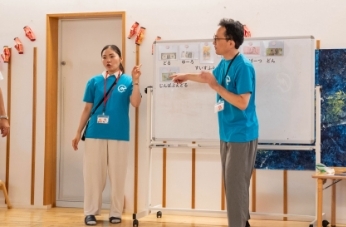

Through this financial education program, children came to recognize the importance of money and the meaning of work, which encouraged them to take a more proactive role in helping at home. At the report session, parents also realized the importance of financial education within the family, making this initiative highly meaningful.
The program is structured around themes that are familiar and relatable to children. I found the content—such as learning to take care of belongings and developing gratitude toward people who work—particularly effective in nurturing these values.
As society continues to move toward cashless transactions, providing children with the experience of earning money through work proved to be a valuable opportunity for them to learn the real-world value of money.

Through discussions about pocket money, I gained helpful ideas on how to talk with my child about using money responsibly and why money is necessary. It also gave me an opportunity to rethink how we approach financial education at home.
The program helped develop my child’s ability to think and act independently. I have seen real changes at home—for example, my child now takes better care of things bought with money they earned themselves.
Q1
Why is this program offered free of charge?
A
We see it as an important part of our mission to provide children with diverse, hands-on learning opportunities as part of financial literacy education. To ensure that as many children as possible can take part, we offer the program at no cost to childcare facilities and parents.
Q2
Is it mandatory to hold the report session for parents?
A
Yes. Holding a report session is required. The program is designed to connect children’s experiences at the facility to financial education at home, so sharing the outcomes with parents is an important part of the program.
Parents’ attendance is optional. We also offer flexibility in how the session is held—including the venue and format—depending on each facility’s circumstances.
Q3
Will the program add to childcare staff’s workload?
A
We provide an educator guidebook covering both pre-program preparation and how to run the session on the day. We also prepare parent-facing notices and all necessary supplies, so the additional workload for childcare staff is kept to a minimum.
We are committed to expanding this program to early childhood education and care facilities nationwide so that more children can take part in the “Social Experience” Pretend Shop activity.
We also aim to strengthen partnerships beyond the facility setting by deepening collaboration with local communities, helping build a community-based framework that supports children’s growth and development.
Please note that this program is designed to run for three weeks or longer.
New Business Development Department
FP Partner Inc.