
FP Partner Inc.Services & BusinessesMoney School
Money School is a financial education program designed for corporate employees. The name is an abbreviation of “MONEY SCHOOL.” (Logo:Registered Trademark No. 6818496/Text ("Money School"): Registered Trademark No. 6802129)
While awareness of the importance of financial literacy continues to grow, a lack of financial knowledge and experience has led to various challenges and risks becoming social issues. We believe that acquiring financial knowledge is essential for long-term financial security and asset building—and that effective financial education requires not only structured learning, but also ongoing support tailored to individual understanding and learning attitudes.
To help create a future in which everyone can live with confidence and pursue new opportunities, we provide the financial education program Money School.

Money School is a financial education service designed to support each participant’s learning journey. Through structured programs and training, it helps individuals develop their own life plans and ideal lifestyles, and make informed choices about financial products based on those goals.
The program consists of six categories—Investment, Real Estate, Taxes and Social Insurance, Insurance, Daily Life and Living, and Inheritance—covering a total of 29 units. Participants receive customized online video content tailored to their personal circumstances, values, and life direction.
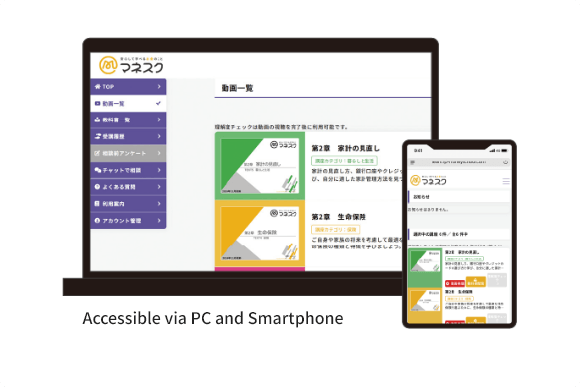
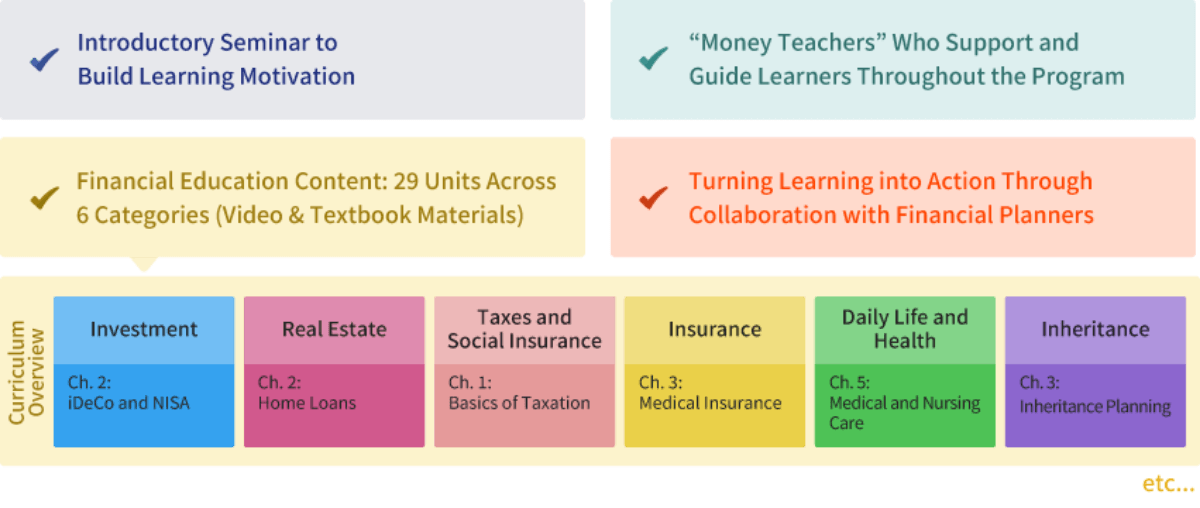
Financial education is often perceived as difficult, which can discourage people from engaging with it. To address this, we have designed Money School so participants can learn at their own pace while continuing to work.
A key feature of the program is the support structure provided by two dedicated roles:
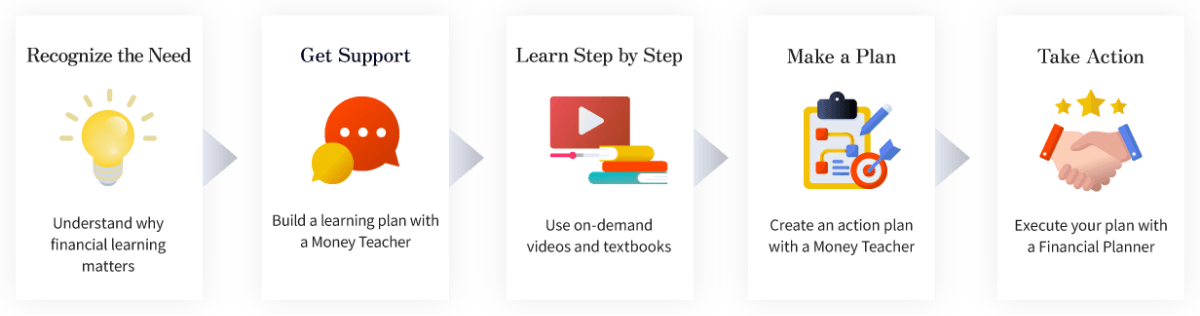
Through Money School, we help employees reshape their financial mindset and build essential life skills by providing the knowledge and capabilities needed to plan their lives through the two pillars of work and asset building.
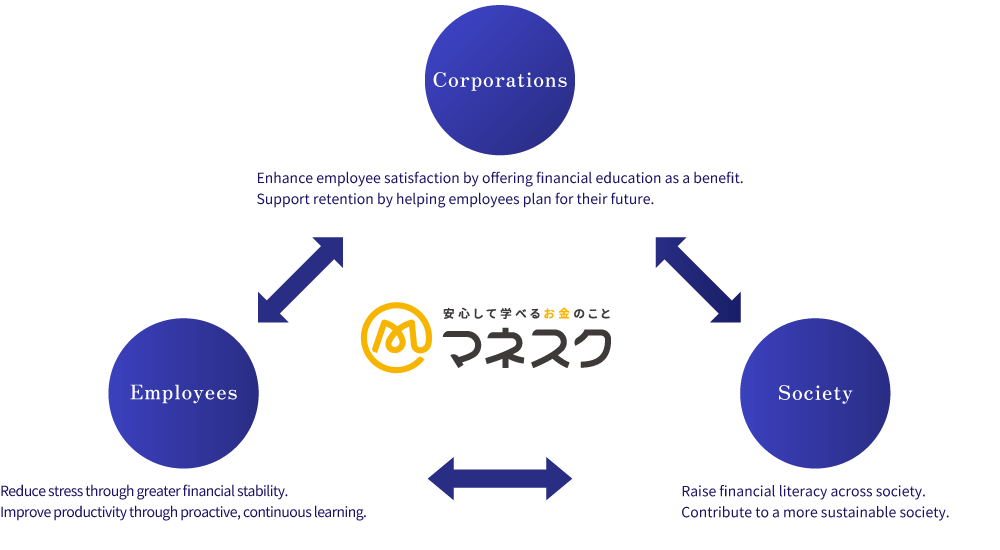
When individuals develop and act on their life plans, they can pursue not only sound financial planning but also their personal goals and aspirations in their careers and family lives. In addition, high-quality financial education can have broader ripple effects—helping foster healthy competition and innovation across the economy and society.
In a capitalist economy, economic activity is driven by three key actors: households, businesses, and government. Within this framework, the flow of money plays a vital role. Money we spend or invest circulates through the economy—funding business activity and public systems such as social security. Understanding these connections helps people see how everyday financial decisions can contribute to a healthier economy and a more sustainable future.
We believe that financial literacy is an essential life skill. According to the Financial Literacy Survey (2022) conducted by the Central Council for Financial Services Information, people with lower levels of financial literacy tend to choose products with higher interest rates and fees—choices that can have a serious impact on their day-to-day lives.
* Financial well-being: A state in which financial worries are reduced and a person is able to manage money in a healthy and sustainable way, enabling them to live with confidence and well-being.
Market Promotion Department, Financial Literacy Promotion Office
FP Partner Inc.
Tel. +81 3-6801-8256
